
The Best Exercises To Build Strong Bones After Osteopenia & Osteoporosis
Understanding Bone Health After Cancer
As a clinical exercise physiologist and cancer exercise specialist, I often hear misconceptions about how to recover bone density.
But the truth is that cancer treatments, including certain medications, can lead to significant bone loss, increasing the risk of osteoporosis and osteopenia.
After treatment, it’s critical to implement strategies that counteract these effects.
But the first thing you need to know is:
Bone Mineral Density Takes A Long Time to Build
To combat bone loss, consistency is key.
Many patients make the mistake of assuming that a short period of exercise will suffice.
In reality, it typically takes six months to a year of consistent effort to see significant improvements in bone mineral density.
Daily habits create a cumulative effect that strengthens bones over time.
You won’t see changes overnight it takes months of dedication.
If you think a few walks with added weight will do the trick, think again!
Remember, the foundation starts with movement.
More than just a workout, it’s about staying active throughout your day. Aim for 7-9,000 steps daily.
Common Mistake: Expecting rapid results without commitment to a consistent routine.
Moving Beyond Weighted Vests
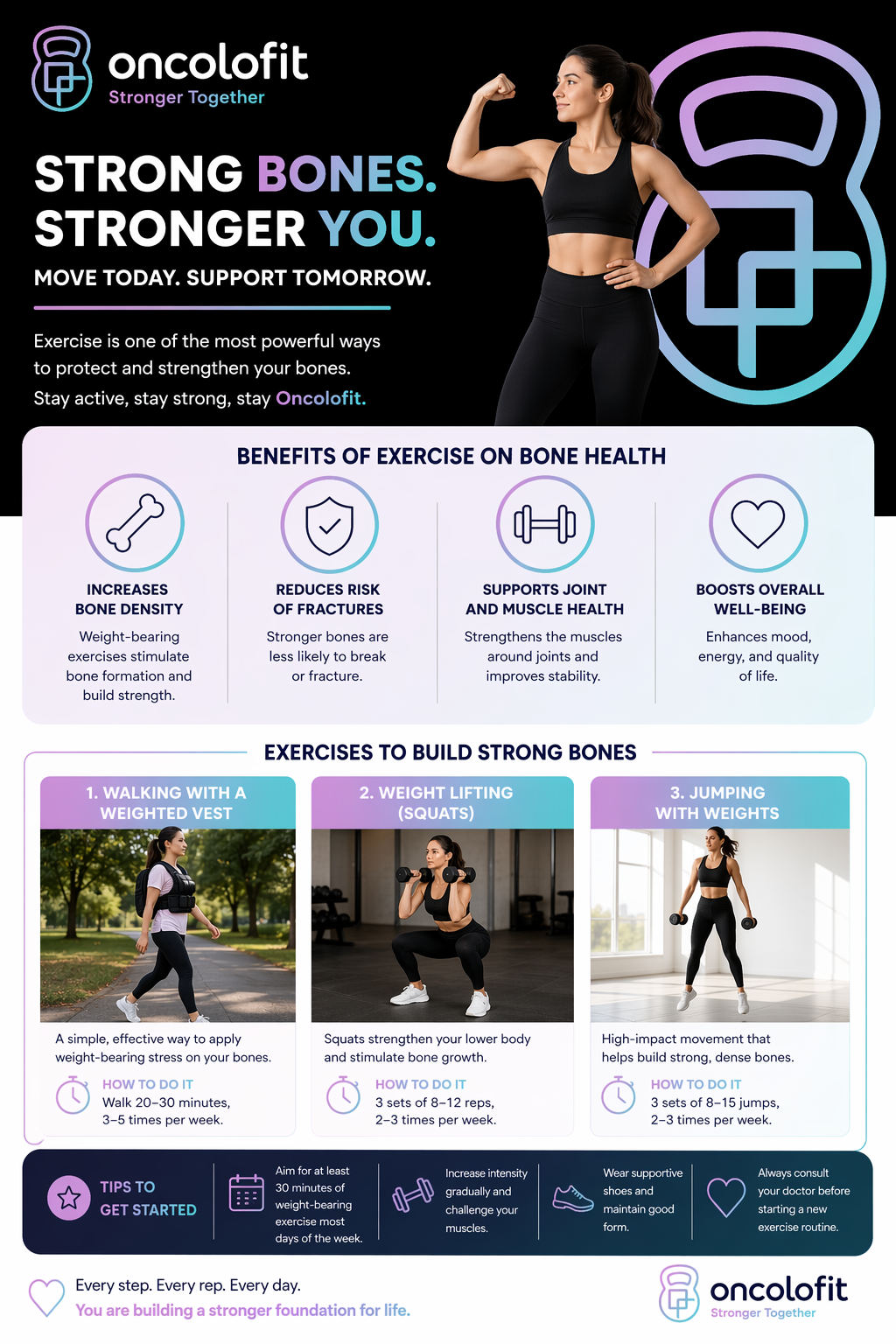
While adding a weighted vest to your walking routine can be beneficial, it’s not a standalone solution for bone health.
Here’s a breakdown of the foundational steps needed:
1. Daily Movement: Aim to integrate more movement into your day. Just walking for 10-15 minutes won’t cut it if you’re sedentary for the rest of the day. You should strive to keep your total sitting time below six to seven hours daily.
2. Step Goals: Set a realistic daily step goal. While the common target is 10,000 steps, aiming for 7,000 to 9,000 steps can be an achievable starting point.
3. Intentional Walking: Engage in longer, brisk walks for at least 45 minutes to an hour a few times a week. This helps to signal your body to build bone density effectively.
After you have this foundation, that is when you add the weighted vest!
I recommend starting with 10% of your body weight and here’s the weighted vest I recommend: https://amzn.to/4cCbELP
This vest allows you to go up to 30 lbs, which is more than enough for most people! Buying a vest that allows for more is a waste of money unless you are a tactical specialist or looking to be in the armed forces.
I also like this vest becuase you can add weight to your body weight exercises too while you walk.
Because weight training is crucial!
Incorporating Strength Training
Once you’ve established a routine of walking, it’s time to incorporate strength training. Here’s how to approach it: Focus on proper form, range of motion, and progressively increase your weights to challenge your bones.
- Start with Proper Form: Focus on mastering the correct form before increasing weights. This minimizes injury risk and ensures you’re effectively targeting the muscles that support bone health.
- Progressive Overload: Gradually increase the weights you lift. If you start with two pounds, aim to lift progressively heavier weights over time, challenging your muscles and bones.
- Key Exercises: Include compound movements like squats and deadlifts that engage multiple muscle groups and exert force on your bones, promoting density growth.
#BoneHealth #CancerRecovery #HealthyLiving #ExerciseTips #WellnessJourney
Adding Impact Activities
After establishing a base of strength and endurance, you can introduce impact exercises:
- Jumping Exercises: Small jumps can be beneficial once you’re confident in your strength training. Start with simple movements like jumping in place or jump rope, ensuring you’ve built adequate range of motion in your calves to prevent injuries.
- Weighted Vest for Walking: Incorporate a weighted vest during your walks or light jogging to increase the load on your bones, promoting greater density over time.
However! Before you start jumping, I recommend building elasticity in your ankles first!
Here is the slant board I recommend: https://amzn.to/3OMKUQQ
And lastly, building bone health after cancer treatment is a gradual process that requires patience and commitment. By focusing on consistency, incorporating the right types of exercise, and ensuring proper nutrition, you can significantly improve your bone density and overall health.
Remember, it’s about making sustained changes and listening to your body throughout the journey.
For more information on how exercise helps build bone health read this article

In this episode, JC, a clinical exercise physiologist and cancer exercise specialist, breaks down if fasting actually helps starve cancer.